

Peptide Foundation Guide for Mature Skin
The most comfortable foundation for mature skin may not be the one making the boldest peptide promises. If you’re concerned that makeup will catch on dry patches or draw attention to texture, that hesitation makes sense. Choosing a peptide foundation for mature skin is less about expecting an age-reversing effect and more about finding a formula whose finish, coverage, and feel suit you.
This guide explains what peptides in makeup can and can’t realistically promise, and how to assess a foundation without confusing cosmetic claims with skincare results. You’ll learn how to compare coverage, finish, texture, shade, and application, then decide which details matter most to you.
We’ll also consider Maison Eloire Cosmetics’ Peptide Perfecting Foundation - 20 Medium Neutral. The product name and shade description are a starting point, not a substitute for checking the current ingredient list and formula details. Let your preferences guide the choice, not the promise that a makeup ingredient can turn back time.
Key Takeaways
- Check the ingredient list and distinguish foundation’s immediate cosmetic effect from longer-term skincare claims.
- Choose a peptide foundation for mature skin by weighing coverage, finish, texture, shade, and the application method you find comfortable.
- Compare formula qualities according to your own preferences; no single finish is right for everyone.
- Build coverage gradually with thin layers, following product directions and allowing each layer to settle.
- Consider Maison Éloire Cosmetics’ Peptide Perfecting Foundation - 20 Medium Neutral, and check its product page for current details.
What Makes a Peptide Foundation Worth Considering for Mature Skin?
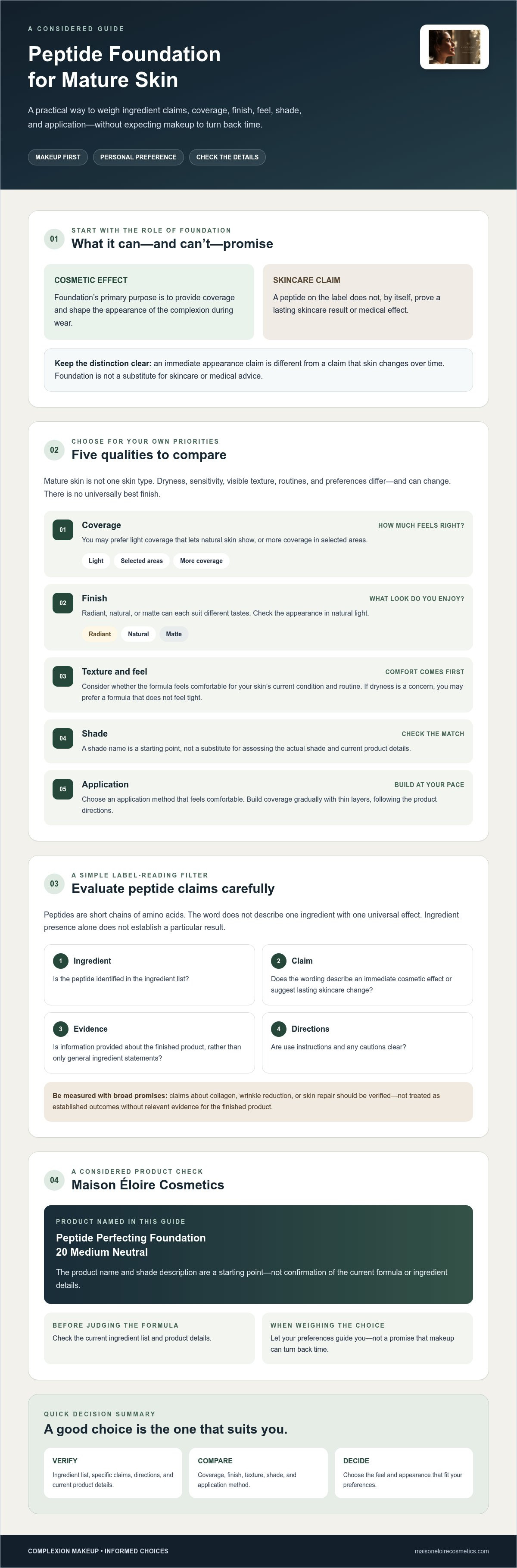
A peptide foundation is complexion makeup formulated with one or more peptide ingredients. Its primary purpose is still cosmetic: to provide coverage and shape the appearance of the complexion. The word “peptide” on a label doesn’t mean the foundation is a medical treatment or has been shown to deliver a lasting skincare result.
Mature skin isn’t one skin type. Some people experience dryness, sensitivity, or more visible texture; others don’t. Preferences can also change with the season, skincare routine, or the look and feel someone wants that day. A peptide foundation for mature skin is worth considering when its verified details and cosmetic qualities suit your own priorities.
What does “peptide foundation” mean on a makeup label?
Peptides are short chains of amino acids, the building blocks of proteins. Their structures can vary, so the word doesn’t describe a single ingredient with one universal effect. For a foundational explanation, see Peptides. In makeup, the term generally signals that a peptide ingredient is included in a complexion formula. Its presence alone doesn’t prove a particular visible or lasting result.
Check the ingredient list to confirm what the product contains, then read its specific claims carefully. A claim about how foundation looks or feels on application is different from a promise of longer-term skincare change. Ingredient placement can offer context, but it doesn’t establish effectiveness by itself.
What might mature-skin users look for in a foundation?
Begin with comfort and preference, not age alone. You might favour light coverage that lets natural skin show through, or prefer more coverage in selected areas. A radiant finish may appeal if you enjoy a fresh look, while a natural or matte finish may better match your taste. None is universally best; the feel and appearance on your skin matter most.
Your skin’s current condition and routine can shape what feels comfortable. If your skin feels dry on a given day, for instance, you may prefer a formula that doesn’t feel tight. If texture is a concern, check how the finish looks in natural light and whether you prefer a lighter application. These are personal considerations, not rules about mature skin.
Think of foundation as the finishing step in a considered routine, not a substitute for skincare. A useful choice balances the coverage you want with a texture and finish you enjoy wearing. Let the ingredient list and specific claims inform your decision, then judge the cosmetic qualities against your own needs.
How to Evaluate Peptide Claims in Foundation
A peptide name on a label can sound persuasive, but ingredient presence alone doesn’t establish that a foundation produces a particular result or has demonstrated clinical effectiveness. Read claims carefully: distinguish what you can see while wearing the makeup from what would require evidence of a longer-term skincare effect.
Foundation is makeup, not a substitute for skincare or medical advice. Its immediate role is to enhance the complexion’s appearance during wear. Coverage may even the look of skin, while a particular finish may create a more luminous or softly matte effect. Those cosmetic results are distinct from claims that a product changes skin over time.
How can you read peptide and anti-aging claims carefully?
Look for the specific peptide named in the ingredient list and ask what the product claims it does. A clear cosmetic claim describes an appearance or experience, while broad promises about “anti-aging” may leave the expected result unclear. The reputation of an ingredient, or evidence about it in another product, doesn’t by itself establish what the finished foundation can do.
Use this check before relying on a claim:
- Ingredient: Is the peptide identified in the product’s ingredient list?
- Claim: Does the wording describe an immediate cosmetic effect or suggest a lasting skincare change?
- Evidence: Is information provided about the finished product, rather than only general statements about an ingredient?
- Directions: Are the use instructions and any cautions clear?
Be especially measured with claims about collagen, wrinkle reduction, or skin repair. Without relevant evidence for the finished product, treat these as claims to verify, not established outcomes. This approach helps keep expectations grounded when choosing a peptide foundation for mature skin.
When should skincare expectations stay separate from makeup?
Think of foundation as complexion makeup whose visible effect is tied to application and wear. It can be part of a considered routine, but it shouldn’t replace skincare suited to your needs. If you have a concern beyond cosmetic coverage, seek guidance from an appropriate healthcare professional rather than expecting makeup to address it.
If a formula is new to you, follow its directions and consider a patch test if appropriate, especially if you have a history of sensitivity. Stop using it if you experience an unwanted reaction, and follow personal advice you’ve received about your skin. For product-specific information, review the current ingredient list and claims on the Maison Eloire Cosmetics foundation page before deciding whether it fits your routine.
Which Foundation Qualities Matter Most for Mature Skin?
Start with your preferences, not an age-based rule. Coverage, finish, texture, and application method all shape how foundation looks and feels. A peptide foundation for mature skin still needs to suit your complexion routine; the peptide label can’t tell you whether its finish or coverage will feel right for you.
How should you compare coverage, finish, and texture?
Use product descriptions as a starting point, then check verified details and realistic swatches where available. Terms such as luminous, natural, and matte describe appearance, not guaranteed comfort or wear. A swatch viewed in one light may look different in another, so consider your usual lighting and how much product you intend to apply.
| Quality | What to consider | Possible trade-off |
|---|---|---|
| Coverage | Sheer coverage offers a lighter veil; buildable coverage lets you add more gradually; fuller coverage gives a more even-looking finish. | More coverage may feel or look more noticeable. A lighter application may leave some variation visible. |
| Finish | Luminous reflects more light, natural aims for a balanced appearance, and matte has less visible sheen. | Your preference may depend on the occasion, lighting, or the look you enjoy. None is universally best. |
| Texture | Consider whether you prefer a fluid, creamy, or otherwise described consistency, using confirmed product information. | Texture affects how a product feels during application, but descriptions alone can’t guarantee how it will wear on your skin. |
| Application | Fingers, a brush, or a sponge may suit different routines and application preferences. | Tools and technique can change how much product is applied and how it appears. Follow the foundation’s directions. |
Skincare preparation and the amount of foundation you use can influence the perceived finish. Apply it over your usual routine, allow layers to settle comfortably, and assess the result in natural as well as indoor light. A heavy application can look different from a thin layer, even with the same foundation.
Decision rule: prioritize the finish and comfort you prefer over age-based marketing language.
How can you judge whether a formula feels comfortable?
Try a small area first, following the product directions, then notice how it feels during wear. Your existing skincare, the day’s climate, and personal sensitivities can all affect your experience, so a quick swatch may not tell the whole story. Don’t push through irritation; stop use and seek suitable advice if a reaction occurs.
How to Apply Foundation for a Comfortable, Natural-Looking Finish
A thoughtful application can help you find the balance you want between coverage and a skin-like appearance. There’s no single tool or technique that suits everyone. Start with the skincare routine you already know feels comfortable, then apply foundation gradually and let your preferences guide the finish.
What preparation helps foundation sit comfortably?
Keep preparation familiar. Follow the directions for your skincare and makeup products, and allow skincare to settle before applying foundation if that feels more comfortable for you. You don’t need to add exfoliation or a new active ingredient just to prepare for makeup. A steady routine makes it easier to notice how the foundation itself feels.
How can you build coverage without overapplying?
Use this sequence as a starting point, adjusting it to your routine and the product directions:
- Prepare your skin. Apply your usual skincare as directed. Give the layers time to settle if you prefer before moving on to makeup.
- Begin with a small amount. Place a little foundation where you want coverage, rather than coating the whole face at once.
- Choose your preferred tool. Use clean fingers, a brush, or a sponge. Fingers can feel intuitive; a brush or sponge may suit your preferred way of blending. None is essential.
- Blend gently. Work in light strokes or presses, using the method that feels comfortable. Avoid tugging at the skin.
- Pause and assess. Check the result before adding more. If you’d like extra coverage, apply a thin layer only to the areas you choose.
- Review the finish. If possible, look in natural light as well as your usual indoor lighting. Add a touch-up later only if you want one and the product directions allow it.
Thin layers give you room to adjust. Applying more at once can make it harder to judge how much coverage you want, while pausing between layers lets the finish settle before you decide whether to add more. The aim isn’t to conceal every variation, but to create an appearance that feels considered and comfortable to you.
If you’re ready to explore a specific option, see the Peptide Perfecting Foundation - 20 Medium Neutral and review its current product details and directions before choosing.
Is Maison Eloire Cosmetics’ Peptide Perfecting Foundation a Considered Next Step?
If you’re weighing a peptide foundation for mature skin, Maison Éloire Cosmetics lists Peptide Perfecting Foundation - 20 Medium Neutral. The product name and shade description give you a specific option to investigate, but they can’t tell you whether the shade, formula, or finish will suit you. Compare it with your complexion preferences rather than treating the name as a promise of a particular result.
What can the confirmed product information tell shoppers?
The listing confirms the product name and shade description, “20 Medium Neutral.” The name alone doesn’t verify the foundation’s peptide ingredients, ingredient placement, coverage, finish, texture, wear, or benefits. Check current product information for those details instead of making assumptions based on the name or claims about peptide foundations generally.
Before deciding, review the current product page and ingredient list. Look for specific ingredients and clear descriptions of the formula and its cosmetic characteristics. If information you consider essential isn’t provided, don’t fill in the gaps from the product title. A measured choice begins with knowing what has actually been confirmed.
What should you confirm before choosing a shade or purchasing?
Use “20 Medium Neutral” as a description to compare with your complexion and undertone preferences, not as a guarantee of a match. Check any current shade guidance or images on the product page, and remember that screens and lighting can affect how colours appear. Don’t assume the shade represents a broader range or suits everyone with similar-sounding complexion characteristics.
Before completing an order, review the details that matter to your decision:
- Ingredients: Confirm the current ingredient list and peptide details rather than relying on the product name alone.
- Formula information: Check available details about finish, coverage, texture, and directions. Don’t infer them if they aren’t stated.
- Shade: Compare the description with your complexion and undertone preferences, allowing for differences in lighting and screen display.
- Purchase details: Review the checkout information and current shipping terms applicable to your order.
If the product name and available details align with what you’re looking for, review the Peptide Perfecting Foundation before deciding. A considered choice begins with clear information and expectations grounded in verified product details.
Choose Your Foundation with Confidence
A thoughtful choice begins with clear expectations. Peptides in makeup don’t, by themselves, prove a lasting skincare result, so let verified product information guide your understanding of the claims. Then consider the qualities you can assess for yourself, including coverage, finish, shade, and how comfortable the foundation feels in your routine.
The right peptide foundation for mature skin isn’t defined by age-based promises. It’s the option that aligns with your complexion preferences and feels like a natural fit for the way you enjoy wearing makeup. Maison Éloire Cosmetics lists Peptide Perfecting Foundation - 20 Medium Neutral; review the current product details before deciding whether it suits your needs.
If you’d like to explore the listing, explore Maison Éloire Cosmetics. The store offers secure online checkout and complimentary shipping on orders over €50. Review the product information and purchase details, then decide whether it fits your routine.
Frequently Asked Questions
Is peptide foundation suitable for mature skin?
It may suit some people, but age alone can’t predict whether a formula will feel comfortable or look the way you prefer. Consider the verified ingredient list, finish, coverage, and your own skin needs. If you’re curious, try a small amount first and follow the product directions. Peptides in makeup shouldn’t be treated as proof of a specific anti-aging effect or a guarantee of a particular result.
What do peptides do in foundation?
Peptides may be included in cosmetic formulas, but their presence doesn’t establish what a finished foundation will do for every user. Check the ingredient list and product-specific claims rather than relying on the word “peptide” alone. Foundation’s central purpose is cosmetic coverage and appearance. It shouldn’t be assumed to replace skincare or treat signs of aging, and claims should be considered in the context of the finished product.
Can peptide foundation help with wrinkles?
Foundation can change how your complexion appears while you’re wearing makeup, but that’s different from treating or reducing wrinkles. Peptide wording alone isn’t evidence of a lasting effect. Review information and claims specific to the finished product, and keep skincare or medical concerns separate from makeup selection. If a claim sounds therapeutic, look for reliable evidence instead of relying on marketing language alone.
How do you apply foundation on mature skin?
Begin with your familiar skincare routine, then allow it to settle if that feels comfortable. Apply a small amount of foundation and blend gently with clean fingers, a brush, or a sponge, according to your preference and the product directions. Add coverage only where you want it, then check the result in natural light when possible. A light, gradual approach makes it easier to assess the finish as you go.
Should mature skin choose a dewy or matte foundation?
Neither finish is right for everyone. A luminous finish may appeal if you prefer a fresh-looking complexion, while a matte finish may better match someone else’s taste. Consider comfort, skincare preparation, the coverage you want, and the product’s verified description. If possible, test a small amount and assess how it looks in the lighting where you usually wear makeup. Choose according to your own preference, not an age-based rule.
How can I choose a foundation shade online?
Start with verified shade descriptions and compare them with your complexion and undertone preferences. View swatches in consistent, natural lighting when possible, and check for current shade guidance on the retailer’s product page. A shade name can’t guarantee a match, since screens and lighting may affect how colour appears. Maison Éloire Cosmetics lists Peptide Perfecting Foundation - 20 Medium Neutral; confirm the current product details before choosing.