

Foundation for Medium Neutral Skin Tone: Find Your Ideal Match
A shade that looks right on screen can still appear too pink, too yellow, too light, or too deep on your skin. Finding a foundation for medium neutral skin tone is easier when you assess two details separately: depth and undertone.
If online swatches and changing light have left you second-guessing, that’s understandable. Shade names vary across brands, and “neutral” alone can’t confirm whether a foundation is the right depth for you. This guide explains how to assess medium depth and a neutral undertone, then test a shade consistently so you can judge the match with more confidence.
You’ll learn what to look for on bare skin, how to apply and observe a test shade in natural light, and which signs suggest it may be too pink, yellow, light, or deep. We’ll also consider Maison Eloire Cosmetics’ listed Peptide Perfecting Foundation - 20 Medium Neutral as an option to assess, not an automatic match.
Key Takeaways
- Assess skin depth and undertone separately before comparing shades.
- Combine several undertone clues, and distinguish persistent colouring from redness or tanning.
- Compare candidate shades on your skin, not by their names alone.
- Follow a consistent swatching routine to assess a foundation for medium neutral skin tone more confidently.
- Consider Peptide Perfecting Foundation - 20 Medium Neutral as a shade option, then judge its individual match on your skin.
What Does Medium Neutral Skin Tone Mean for Foundation?
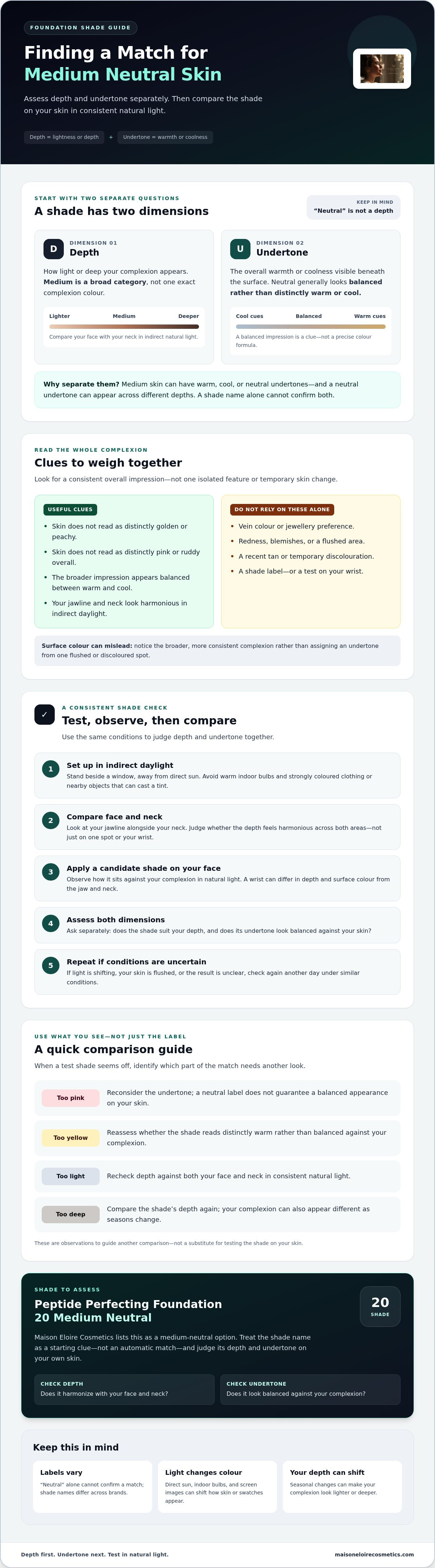
Foundation shade descriptions combine two separate judgments. Medium describes how light or deep your complexion appears; neutral describes its undertone, the overall warmth or coolness visible beneath the surface. One characteristic doesn’t determine the other. A medium complexion can have warm, cool, or neutral undertones, and a neutral undertone can appear across a range of depths.
Skin colour is influenced by factors including melanin and genetics, as outlined in this overview of human skin color. For choosing makeup, treat depth and undertone as practical observations rather than fixed labels. “Neutral” suggests an overall balance, but it doesn’t mean every shade carrying that label will blend into your skin. Formula, lighting, and the way a shade reads against your face still matter.
How to Recognize Medium Skin Depth
Medium is a broad depth category, not one exact complexion colour. Assess your face alongside your neck in natural, indirect light. Direct sun, warm indoor bulbs, and screen images can shift how light or deep your skin appears.
Look for a depth that feels harmonious across both areas rather than judging from one spot on your face. Seasonal changes can affect your assessment: after more time outdoors, your complexion may appear deeper, while it may look lighter at another point in the year. Your preferred foundation depth can shift with it.
What a Neutral Undertone Can Look Like
A neutral undertone has an overall impression that isn’t clearly warm or cool. It may appear balanced beside warm and cool shades, without a strong golden, peachy, pink, or bluish cast. Treat these as clues to consider together, not a checklist with one decisive answer. Vein colour and jewellery preference aren’t reliable stand-alone shade tests.
Separate undertone from what’s happening at the skin’s surface. Redness, blemishes, recent tanning, or temporary discolouration can make parts of the face look different from their underlying tone. Notice the broader, more consistent impression of your complexion rather than assigning an undertone from one flushed area. This distinction gives you a clearer starting point for assessing a foundation for medium neutral skin tone.
Keep the two questions distinct as you begin: does the shade suit your depth, and does its undertone look balanced against your skin? A shade name can suggest an answer, but observing both characteristics together is what helps you judge whether it looks harmonious.
How to Tell Whether Your Undertone Is Neutral
No single home test can confirm an undertone. Look for patterns across several observations, then check whether a foundation appears harmonious on your skin. Neutral usually means your complexion doesn’t read as distinctly warm or cool overall. It isn’t a precise colour formula, and it doesn’t guarantee that every shade labelled “neutral” will suit you.
Shade labels and isolated tests can offer clues, but neither can confirm a foundation match by itself. A vein that looks blue or green, or a preference for gold or silver jewellery, may be interesting to notice, but neither should decide your shade. Your face can also show surface redness, temporary discolouration, or a tan that changes its appearance without changing your underlying undertone.
Compare Your Skin in Consistent Natural Light
Stand beside a window in indirect daylight, away from direct sun, and compare your jawline with your neck. Use a plain background where possible, and move strongly coloured clothing or nearby objects out of view. Reflections from bright colours can cast a tint onto your skin and make it appear warmer, cooler, or more flushed.
Look for the overall impression rather than focusing on a single patch. If the light is shifting, your skin is flushed, or the result seems uncertain, repeat the observation on another day under similar conditions. A consistent view is more useful than a quick glance.
Use Warm, Cool, and Neutral Clues with Care
Warm and cool are comparison points, not strict rules that describe every complexion. Ask whether your skin appears distinctly golden or peachy, distinctly pink or ruddy, or more balanced between those impressions. Redness alone doesn’t establish a cool undertone, and a tan or temporary skin change can affect what you see.
Test foundation on your face rather than relying on your wrist. The wrist may differ in depth and surface colour from your jaw and neck, so a shade that seems suitable there may look different where you intend to wear it. Observe how the shade sits alongside your complexion in natural light, and consider the result with your other undertone clues.
The Cosmetic, Toiletry and Perfumery Association offers broader information about the cosmetics industry, but industry resources can’t determine an individual shade match. If you’re considering a medium-neutral option, you can review the listed foundation shade from Maison Eloire Cosmetics as a starting point. Its label is a clue to assess, not a guarantee; judge the colour against your own skin before deciding.
How to Compare Medium Neutral Foundation Shades
Compare a shade on two dimensions: depth, meaning how light or deep it appears against your complexion, and undertone, meaning whether its overall cast looks warm, cool, or balanced. A shade can be close in depth yet look too pink or too yellow. A neutral label also doesn’t tell you whether the shade is light enough or deep enough for you.
Use shade names as clues, not universal standards. A number or the word “medium” can mean different things from one brand to another. If a product page provides depth and undertone details, consider both. Don’t assume anything about the shade or formula that the page doesn’t state.
Read Shade Descriptions Without Overrelying on Labels
Product images can help narrow your choices, but screens and lighting don’t reproduce every complexion reliably. A shade viewed on a bright phone display may look different in daylight or against your own skin. Treat online swatches as a first impression, then verify the colour on your face when possible. No single “medium neutral” shade is automatically right for everyone in that broad category.
Assess Swatches on the Face and Neck
Apply narrow swatches along your jawline, extending towards your neck, so you can compare both areas at once. Keep the marks separate and observe them after they’ve settled. A shade that initially seems close may look more noticeable as it settles or when viewed in different light. Assess it beside your natural skin, not just on its own.
Use this simple guide to describe what you see:
| Observation | What to check |
|---|---|
| Too light | Does the swatch look paler or stand out against your jaw and neck? |
| Close in depth | Does its lightness or depth look harmonious, while the undertone still needs checking? |
| Too deep | Does it appear darker than the surrounding skin or leave a visible edge? |
Once a shade seems close in depth, consider its cast. If it looks distinctly pink or yellow beside your skin, it may not appear balanced even if the depth is suitable. Check your leading option in natural light, then under the lighting you commonly use. If you’re assessing a foundation for medium neutral skin tone, this paired comparison is more informative than a shade name alone.
How to Test Foundation for Medium Neutral Skin Tone
A shade is easier to judge when you test it as you’d actually wear it. Begin with clean skin, apply your usual skincare, and let it settle before swatching. If you typically wear primer, include it in the test; if not, keep the test simple. This helps you assess the colour alongside the routine it needs to sit with.
Apply a Jawline Swatch and Let It Set
Place a small stripe from the lower cheek across the jaw towards the neck. Blend the edges lightly, but leave enough product visible to compare its colour with your skin. Follow the foundation’s directions and allow the swatch to settle before deciding. Don’t judge only by the shade in the container or its first wet appearance.
Look at the applied shade beside both your face and neck. Notice whether it appears lighter or deeper, or whether a pink or yellow cast becomes more apparent. The aim isn’t to make every part of your complexion identical; it’s to see whether the shade looks harmonious where your face and neck meet.
Check the Match in More Than One Setting
First assess the swatch in indirect daylight. Then check it under the lighting you use most often, since a shade can read differently in a room than beside a window. If you’ll wear foundation through the day, consider how it looks in the settings you commonly move between. Avoid relying on a single mirror, bulb, or quick glance.
If the shade looks clearly too light, too deep, too pink, or too yellow, treat that as useful information rather than trying to convince yourself it works. If you’re uncertain, compare another candidate shade using the same preparation and placement. A consistent process makes differences easier to see.
Before deciding, use this brief checklist:
- Is your skin clean and prepared as you intend to wear foundation?
- Did you apply the swatch across the jaw towards the neck and let it settle?
- Does the shade look harmonious in indirect daylight and your usual lighting?
- Is there an obvious difference in depth or a noticeable pink or yellow cast?
- If you’re unsure, have you compared another shade rather than forcing a choice?
This measured test can help you assess the foundation for medium neutral skin tone that seems most promising, without treating a shade label as a guarantee. When you’re ready to consider the listed option, view Peptide Perfecting Foundation - 20 Medium Neutral and assess its shade information alongside your own observations.
Consider Maison Eloire Cosmetics’ Peptide Perfecting Foundation - 20 Medium Neutral
The listed shade, Peptide Perfecting Foundation - 20 Medium Neutral, may be worth considering if you identify with medium skin depth and a neutral undertone. Its name signals those shade characteristics, but it can’t confirm how the colour will look on your complexion. Medium and neutral cover a range of appearances, so a personal test remains the clearest way to assess a match.
Who May Want to Consider This Listed Shade
This shade could be a candidate if your complexion appears medium in depth and neither distinctly warm nor distinctly cool in undertone. Treat that description as a starting point, not a verdict. Your face and neck may differ in appearance, and your preferred level of coverage can influence how noticeable a shade feels once applied. Assess the colour itself rather than assuming the product will suit you based on its name alone.
Check whether the shade seems appropriate in both depth and undertone. It might look close in depth but read too pink, yellow, light, or deep against your skin. Those observations help you decide whether the listed option deserves a closer comparison.
What to Review Before Choosing Online
Before choosing, review the current product-page shade description and imagery. Compare the stated shade details with what you’ve observed about your complexion, while remembering that screen settings and product photography can affect how a colour appears. If the page doesn’t provide a detail, don’t infer it from the product name or image.
When you have the foundation to test, follow the jawline method from the previous section: apply a small swatch across the lower cheek towards the neck, allow it to settle according to the product directions, and assess it in more than one familiar lighting setting. Consider whether its depth and undertone look harmonious beside your skin. If you can’t test it before choosing, use the product-page information as a guide rather than proof of a personal match.
This measured approach is useful when considering a foundation for medium neutral skin tone. First decide whether the shade description broadly fits your observations, then let the swatch provide further evidence. Explore the listed product details and compare them with the qualities you’ve identified before making your choice.
Choose Your Shade with Greater Confidence
A thoughtful foundation match begins by considering depth and undertone separately, then checking how they work together on your skin. For a foundation for medium neutral skin tone, shade names can guide your search, but a prepared-skin swatch assessed in natural and familiar lighting offers more useful evidence.
Maison Eloire Cosmetics lists Peptide Perfecting Foundation - 20 Medium Neutral as an option to consider if medium depth and a balanced undertone sound like your complexion. The label is a starting point, not a promise of an exact personal match. Review the listing’s current shade information and compare it with what you’ve observed before making your choice.
Maison Eloire Cosmetics offers beauty and cosmetics shopping online, so you can explore the listed shade at your own pace. Explore Peptide Perfecting Foundation - 20 Medium Neutral and make your choice with a clearer sense of what to look for.
Frequently Asked Questions
Is medium neutral skin tone the same for everyone?
No. Medium describes a broad range of skin depth, while neutral refers to undertone, and neither label identifies one exact complexion. Brands may also use shade names differently, so “medium neutral” isn’t a universal colour standard. Lighting, seasonal changes, and individual variation can affect how foundation looks. Treat the label as a starting point, then compare an applied swatch with your face and neck.
How can I tell if my skin has a neutral undertone?
Consider whether your complexion looks more balanced than distinctly warm or cool in consistent, indirect daylight. Don’t rely on one clue, such as wrist veins or jewellery preference, to decide. Surface redness, tanning, and colours reflected from nearby clothing can influence what you see. If you’re unsure, observe your jawline and neck on another day, then use a foundation swatch to see how a candidate shade reads against your skin.
Can I choose foundation for medium neutral skin tone online?
You can use a shade description, product imagery, and available shade comparisons to narrow your options for a foundation for medium neutral skin tone. They’re useful clues, but screens and lighting can make colours look different from how they appear in person. Treat “medium neutral” as a starting point, not a promise of a match. If possible, test the shade along your jawline and compare it with your neck in natural light.
How do I test whether a foundation shade matches my skin?
Apply a small swatch along your jawline, blending it lightly towards your neck while leaving enough colour visible to assess. Follow the product directions and let the swatch settle before judging. Check whether it looks noticeably lighter, deeper, pinker, or more yellow than the nearby skin. Assess the result in indirect daylight and your usual indoor lighting. A promising match should look harmonious across your face and neck.
Should foundation match my face or my neck?
Compare both, especially along the jawline where your face meets your neck. A shade that blends into one area but looks stark against the other may feel unbalanced overall. Don’t treat one small spot as definitive; facial redness or seasonal changes can affect how individual areas appear. Consider your own preference, then check the swatch in natural light before deciding whether it looks harmonious across both areas.
Why does foundation look different after I apply it?
Foundation can appear different once spread across skin, layered over your usual skincare, or viewed under another light source. Product images and phone screens can also affect how you perceive its colour. Follow the product directions, allow the swatch to settle, and compare it with nearby skin in consistent lighting. A change in appearance doesn’t necessarily mean the shade itself has changed, so check carefully before drawing a conclusion.
Is Peptide Perfecting Foundation - 20 Medium Neutral right for every medium skin tone?
No. A shade name can’t guarantee a match for everyone with medium skin. Maison Éloire lists Peptide Perfecting Foundation - 20 Medium Neutral as a medium-neutral option, which may be worth considering if those characteristics describe your complexion. Individual depth and undertone vary, and product imagery may not show every complexion the same way. Review the current product-page details, then use a careful jawline swatch to assess the shade on your skin.